Kazakh Meat Dishes
Kazakh national food can best be summarized in one word: meat. Any proper lunch or dinner will include meat, and traditional
cuisine is filled with recipes with horse meat or lamb as the key ingredient. Beef is used less often in Kazakh cuisine, while
poultry does not even qualify as meat to the average Kazakh.
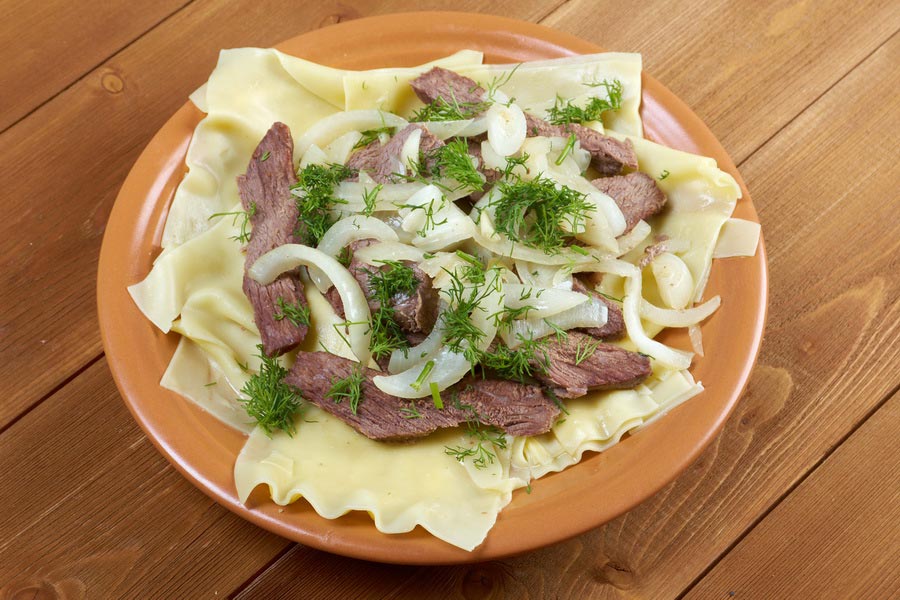
Besbarmak (beshbarmak) is the national dish of Kazakhstan, and as such is served at nearly every feast. This dish of boiled
meat and thin squares of homemade noodles is usually served with broth on a large communal plate. Besbarmak is sometimes
referred to in Russian as Kazakh-style meat.
Kuyrdak (roast meat) is usually served before the main course of besbarmak.
Syrne (sirne), fried young lamb with onions and potatoes, is one of the most beloved Kazakh meat dishes.
Kazy and shuzhyk are two types of homemade horse sausage that are often seen on the table on holidays.
Two of the most popular local meat dishes, laghman and manti, deserve special attention
Kazakh Laghman
Kazakhs consider this dish their own, although the roots of laghman are actually in Uyghur cuisine.
Most of the approximately 275 thousand Uighurs in Central Asian live in Kazakhstan, and it was their
ancestors who first introduced this dish to Kazakh cuisine.
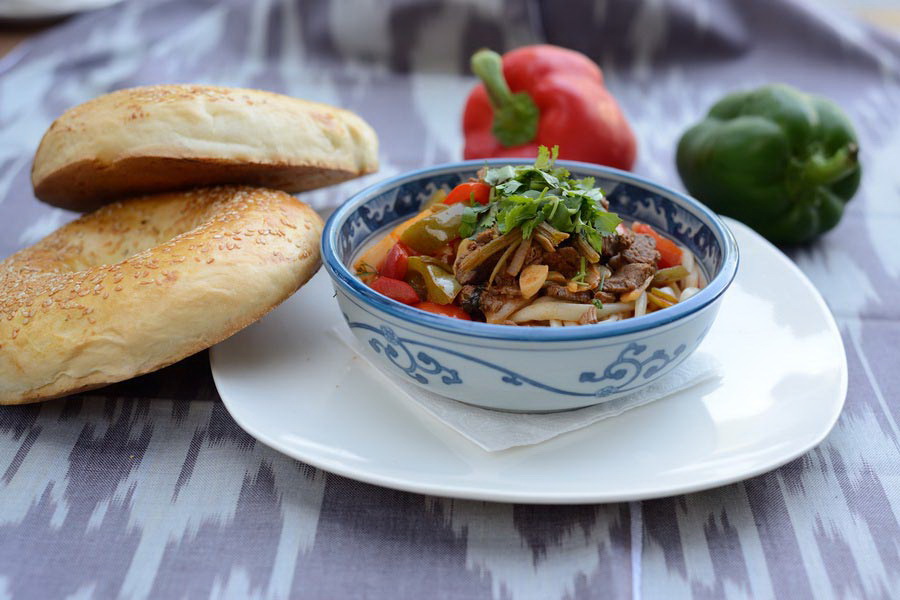
Kazakh laghman is made from long noodles, meat (usually beef without fat) and vegetables. You can use
whatever vegetables you prefer, but bell peppers, onions, Chinese cabbage, spices and herbs are the most
traditional. Laghman may be served in broth as a soup or as a noodle dish with a thick vegetable gravy.
Kazakh Manti
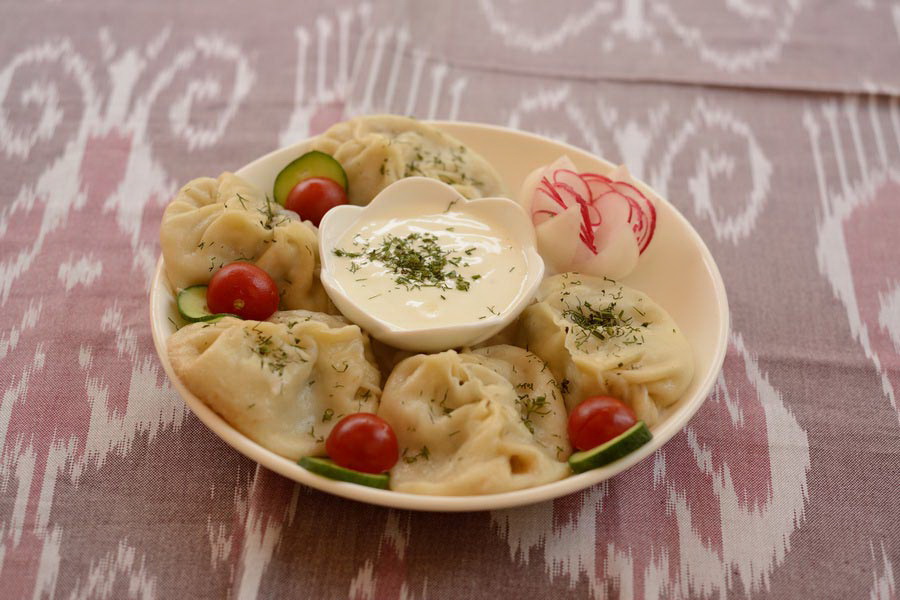
Kazakh manti are steamed dumplings stuffed with minced meat. The meat filling is flavored with onions and
spices before being placed in the center of a small cut of dough, which is then folded around the meat.
The manti are cooked in a special tiered steamer and are often eaten with kaymak (sour cream) or a tomato
sauce. If youre looking for vegetarian food in Kazakhstan, manti can occasionally be found stuffed with
potato rather than meat.
Kazakh Soups
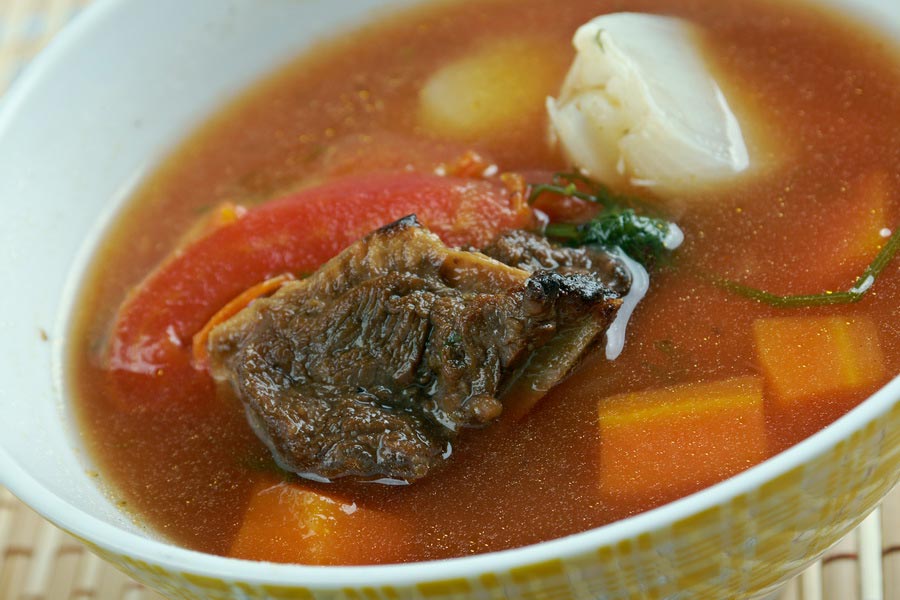
Sorpo (also called shorpo or shurpa) is the most common of Kazakh soups. To prepare sorpo, lamb is boiled
in water until cooked. The broth is then filtered and poured into a bowl and the chopped meat is added to it.
Today sorpo often includes potatoes and carrots too.
Kespe is a Kazakh soup in which egg noodles, carrots and herbs are added to a boiled broth.
Naryn is a soup made from the meat broth of besbarmak and very thin noodles which are mixed with finely chopped meat.
Kazakh Dairy Products
Kazakh dairy products occupy a special place in the national cuisine. They primarily consist of fermented milk products
and dishes which call for these ingredients. Some of the most popular include:
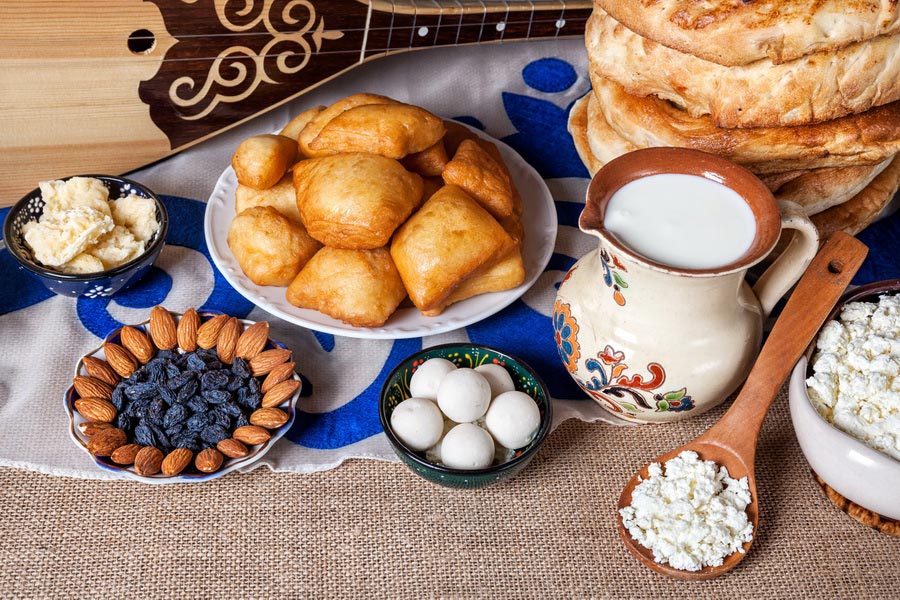
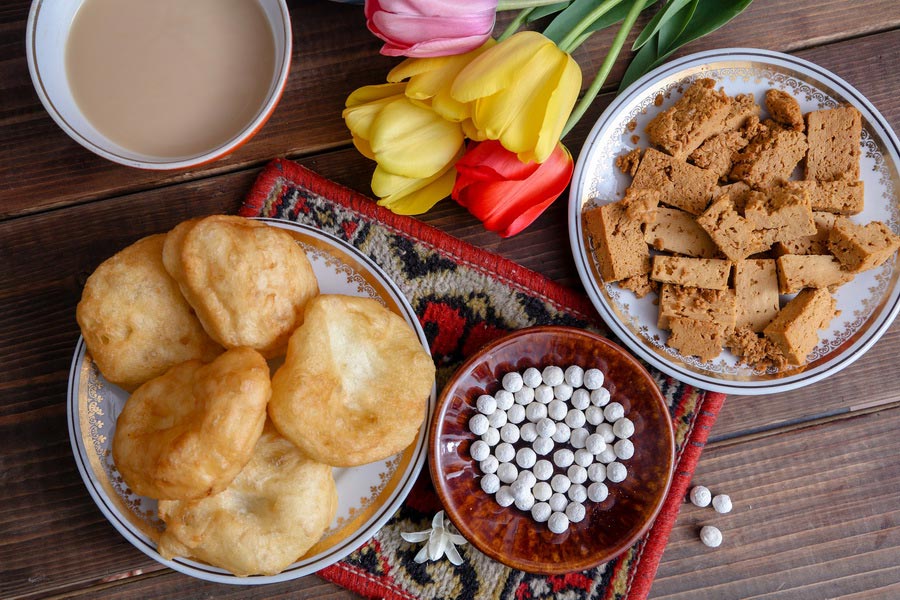
Kurt - dried balls of sour milk, salt and sometimes pepper which are 2-5 centimeters in diameter;
Irimshik - faintly sweet hard cheese made from cow or sheep milk;
Kaymak - fresh cream very similar to sour cream;
Kurt and irimshik can be consumed as separate foods, while kaymak is typically eaten with bread or added into soups.
Kazakh Fish Dishes
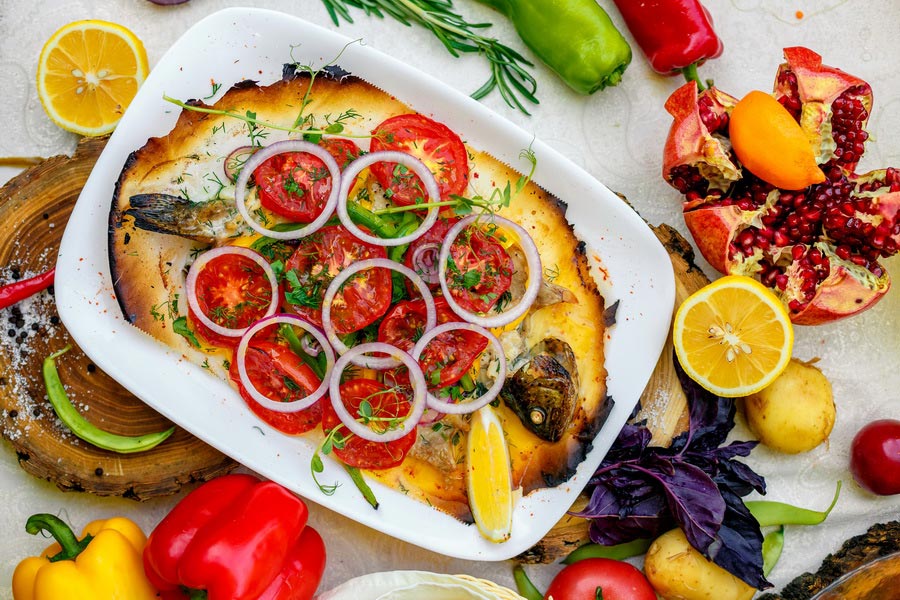
Despite being a landlocked country, Kazakh national food also includes fish dishes. While not as common as meat-based meals,
they occupy a central place on the table when they are served.
The most famous of Kazakh fish dishes is koktal, a hot, smoked fish which is cooked on a stake and served with vegetables.
Residents of South Kazakhstan love a dish called karm, a boiled fish mixed with noodles and generously smothered in butter.
Kazakh Bread Products
It is impossible to imagine local cuisine without Kazakh bread products.
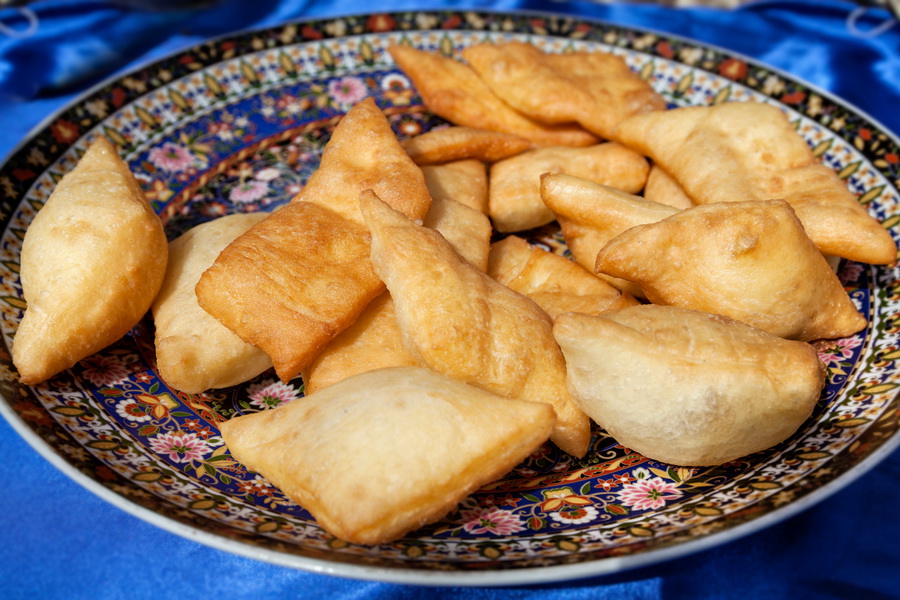
Baursak are small chunks of square or round yeast dough which are fried in oil and served with tea, soups and main courses.
A very traditional Kazakhstan food, baursak is so central to local cuisine that a well-known proverb states: "Besbarmak-kuyrdak-baursak,
and you can do without the rest!"
Shelpeki is a thin unleavened bread which is fried in oil.
Tandoor nan is everyday yeast bread baked in a clay oven (tandoor) and served with every meal.
Ak-nan is a flat cake with onions cooked into the dough. It is often served with besbarmak.
Samsas, puff pastries filled with meat, potatoes or cheese, are the ultimate Kazakhstan street food.
Kazakh Drinks
Kazakh cuisine includes not only food but also unusual drinks. Black tea is very popular both at home and in social settings.
Green tea is less common save for the so-called Tashkent tea, a mixture of black and green tea with lemon and honey.
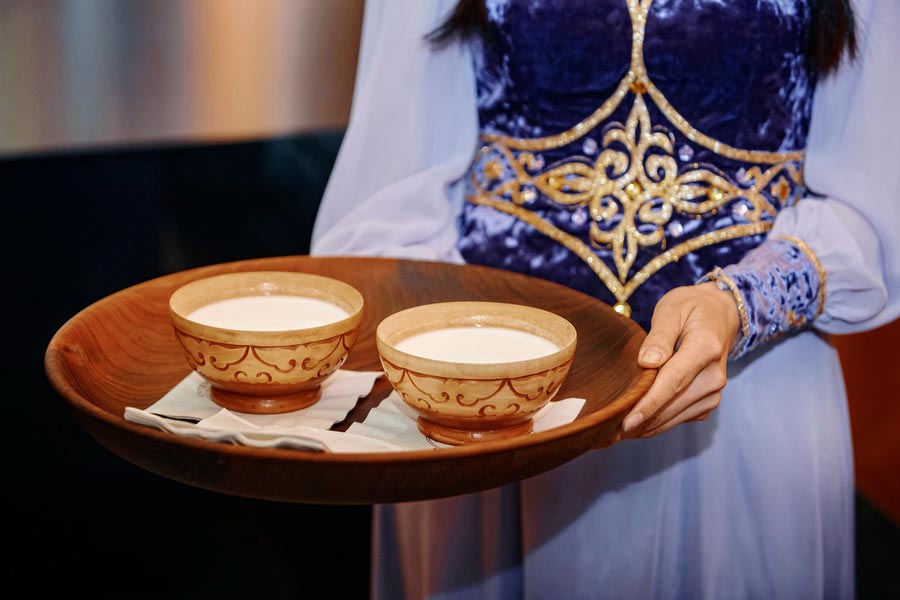
Fermented milk products are very popular Kazakh drinks. Shubat and kumys (kumis) are made from camel and mare's milk, while
katyk and ayran are derived from cow's milk.
Shyrchay is black tea with milk, salt, butter, flour and fried tail fat. It is usually only served at home.
Kefir is either enjoyed as a standalone drink or mixed in with hot breakfast cereals. It is full of healthful properties for
the skin and digestive system.
Kazakh Sweets
Kazakh national cuisine would be incomplete without sweets. While desserts do not play a prominent role in the local diet, the
Kazakh sweets that are commonly served are well worth tasting.
Shak-shak (shek-shek) is made from small pieces of dough which are fried in oil and mixed with honey. It is usually decorated with
raisins and nuts before serving.
Balkaymak is a stewed cream. As the cream is simmered over low heat, flour and honey are gradually added until a light brown mass
has formed. Balkaymak is best when eaten with hot baursak.
Zhent is a Kazakh dessert made from cottage cheese, millet, sugar, butter and raisins. It is usually prepared on special occasions
and can resemble Uzbek halva in appearance.