
Racing Qualifications
Car Specifications
A Formula One car is an open-wheel, open-cockpit, single-seat racing car with two main components: the chassis and the engine. The whole unit must not weight less than 798 kg (1,759 lbs) including tyres and the driver. The maximum dimensions of the car must be no more than 180 cm wide and 95 cm high. Despite having no specified maximum length, most cars tend to be around the same length.
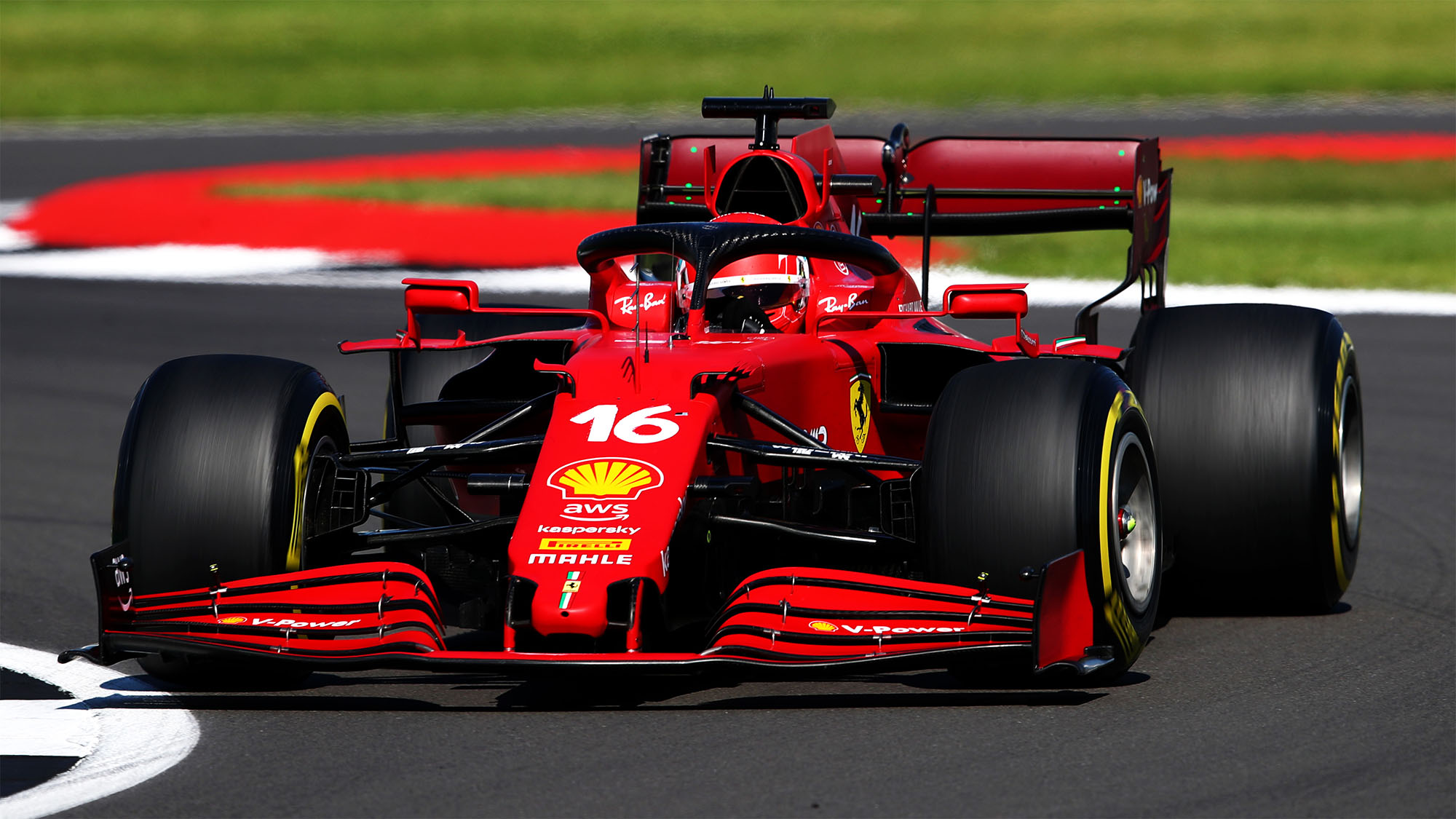
- Engine: Each power unit includes an Energy Recovery System which harvests extra heat energy from the brakes and the exhaust. It produces around 600 horsepower and ERS adds another 160 hp for the short bursts
- Chassis: Mostly made from carbon fiber and other ultra-lightweight components
- Gearbox: The transmission is a semi-automatic sequential carbon titanium gearbox. It is rear-wheel drive and has 8 forward gears with 1 reverse gear
- Wheel: It can change gears, brake pressure, call the radio, and adjust the fuel
- Brakes: Deploy disc brakes with a rotor and caliper at each tyre
- Tyres: Since 2009, F1 cars have used smooth thread, slick tyres with dimensions of: Front Tyres: 245mm (width) and Rear Tyres: 355mm and 380mm (width)
- Fuel: Controlled mixture of ordinary petrol and can only contain commercial gasoline compounds
Drivers Regulations
Anyone who can afford to buy themselves a car could compete in F1, however, any driver wanting to race must obtain an FIA Super License. This was made a qualification by F1's governing body, the FIA, which is based on various factors. Firstly, drivers must hold a current FIA International Grade A license, obtain a valid driving license and be at least 18 years old at the start of their first F1 race. Then, the driver will be tasked with passing a knowledge test on the International Sporting Code and F1 Sporting Regulations, and are required to have completed at least 80% of two separate seasons from a range of certified single-seater championships. Finally, drivers have to obtain 40 points on their path to F1 from lower tier racing championships, such as F2 and F3.
Safety Regulations
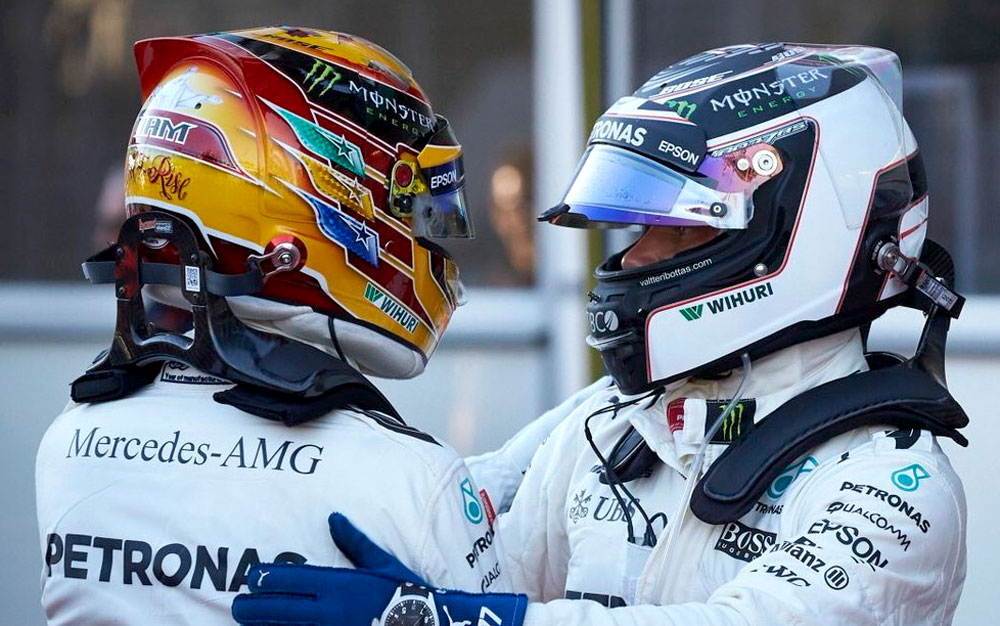
The race helmets are fire resistant and compulsory equipment. They are strong and light (1.2 kg) to reduce weight at high speeds. Hans, which stands for Head and Neck Support, protects the drivers vertebrae inside the cockpit. It also reduces the risk of a head collision on the steering wheel in an accident. The racing suit helps to protect them from fire accidents. The multilayered suit matches the same fire safety specifications as NASA suits and the material can survive temperatures around 700°C for more than 10 seconds.
Penalties

F1 is governed by the Fédération Internationale de l'Automobile (FIA), whose job is to set the rules and regulations, as well as all other requirements for the sport. For each race, there is a panel of race stewards who monitor the race to see if any rules have been broken. If the panel deems a rule has been broken, the stewards assess the perpetrator with one of the many forms of penalties.
Warnings and Reprimands
The least harsh penalties a driver can get. For example, if a driver exceeds track limits during a race, they are given a warning. Once they earn a number of warnings, they are faced with a time penalty. A reprimand is similar to a warning except you are only allowed to receive 4 within a season. Yuki Tsunoda received a fifth reprimand of the season for a sporting offence when he drove to the pits with loose seatbelts in Zandvoort, causing a severe safety hazard, meaning he was given a 10-place grid drop for the next race in Italy.
Time Penalties
Time penalties are served when the drivers pit, and the crew can't work on the car before the penalty passes. If they don't pit again before the race ends, the penalty is added to their finishing time. Reasons why drivers receive such penalties vary. For example, Esteban Ocon received 3 time penalties in 2023 at Bahrain. A 5 second penalty for having his right front tyre outside the starting box before lights out, then a 10 second one due to the mechanics working on the car 4.6 seconds into the first penalty, and another 5 second penalty for exceeding the 80kph pit lane speed limit by 0.1km/h. Another example would be Carlos Sainz receiving a 5 second penalty for singing Smooth Operator by Sade due to copyright laws.
Drive-Through Penalty
Drivers drive through the pit lane and join the rest of the race, or in other instances, they're hit with a 10-second stop-and-go penalty in which they pit, wait 10 seconds, have no work done to the car and join the race again. For example, this peanlty can come from speeding in the pit lane or ignoring race flags.
Grid Penalties
Grid penalties are usually given when drivers have engine components changed more than the times allowed. Charles Leclerc received a 10-place grid penalty for the Saudi Arabian GP for having his control electronics changed, which was done twice already, when only two are permitted for the entire season.
Disqualification
Disqualification is given when a driver commits a serious offence. For example, Sebastian Vettel was disqualified from his P2 finish at the 2021 Hungarian GP because Aston Martin failed to provide the required fuel sample after the race. Meaning the FIA was unable to check if his car was running legal fuel.
Suspension
The worst penalty a driver can receive and only happens in extreme circumstances. In the last 40 years, only six drivers were suspended, with Romain Grosjean being the latest. The Frenchman was given a race ban for the 2012 Italian GP after he caused several crashes that season.